|
Lean Welding Manufacturing Tools
FREE Summary
and
Outline of Modules
for Downloading,
Click on ICON
Our Lean Welding Manufacturing Tools, "Optimizing Shielding Gas Use and Eliminating Waste"
Part Number WAT-LWM-SG; |

Provides a
comprehensive approach to allow a:
 |
Lead Welder |
|
Welding Foreman |
|
Welding Supervisor |
|
Welding or Manufacturing Engineer |
To understand MIG shielding gas waste and why excess flow rates
decrease weld quality.
To measure and plot gas use by machine and overall use
compared to wire use.
To calculate gas leaks in pipeline and gas hoses
|
|
You'll receive a 7 Module Learning Program that includes:
|
Over 70 pages of easy to read bullet points, figures, graphs and
tables. |
--
Each page includes notes that help explain key points.
|
What flow levels to set and
why. |
|
Sufficient information to allow key personnel to understand the problems
associated with gas waste. |
|
Training material they can use to educate all welders. |
|
Production data showing how weld quality improved with a reduction in
weld start surge. |
|
Simple methods to assure
sustainability of your savings provided. |
|
A quick method to check gas flow rates at the welding torch and compare torch gas flows with those on a gas flowmeter or
flowgauge. |
|
Example tables showing ways the data can be recorded and maintained. |
|
Information on why torch and flow gauge flow rates will be different. If significantly different, possible reasons and solutions are provided. The loss
could cause poor welds. |
|
A suggested approach to plot usage data each month. This keeps
the focus on gas waste problems and monitors results for each welding
machine. |
|
A method of
preparing an Excel Spreadsheet is
provided that can be used to quantify the leak rate in a pipeline and gas
hoses. |
|
Examples of gas usage and savings are provided and explained. |
|
Ways to check gas leaks are
outlined. Why leaking gas out means air and moisture are leaking
back in! |
|
| Shop Gas Usage:
In addition to plotting data for each MIG welding machine, information on using a
simple technique to check the shops total gas usage is provided.
|
With two pieces of information from purchasing (easily obtained from
your suppliers) can be compared with
benchmark data provided.
A technique to calculate a 3 month moving average is shown. The
reason for using this statistical approach is defined. |
|
A technique of plotting gas usage divided by wire usage is outlined
and explained. This simple plot will quickly show when excess gas is being used.
When the ratio changes it will raise a red flag. |
|
Did you know a 0.035 inch diameter size leak in a 50 psi
gas pipeline or hose can cost you over $14,000/year. You'll learn
why. Fixing one such leak will provide a two week
payback of the
Lean Welding Manufacturing Tools
program ! |
|
|
Module Titles
Module 1 -
How to Use the Learning Program
Module 2 - Reasons for Gas Waste
Module 3 - Reasons for Gas Surge At Weld Start
Module 4 - Solution To Excess Start Gas Surge
Module 5 -
Setting Proper Gas Flow Rates
Module 6 - Gas Leaks and Solutions
Module 7 -
Additional Information on Leaks
|
 |
Lean Welding Manufacturing
-Shielding Gas Learning Program can be purchased
as PDF format
in a download to you computer. The PDF file is opened using Adobe's
free PDF reader. If a printed version is desired it is easy to make
from the PDF File following copyright terms. The price
was established with the shipping and handling charges that will be
automatically added to the order. |
|
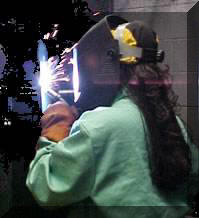 "Understanding
and Setting MIG Gas Flow Rates" Part # WAT-UGF "Understanding
and Setting MIG Gas Flow Rates" Part # WAT-UGF
A Simpler Program is
Available Designed
for Welders Includes:
Reducing gas
waste and improving weld start quality
This
Self Study Learning Program is Easy to Follow...
Click Here or Picture for Details
|
|

Background in Lean Manufacturing |