Home Up Search                 

.

  See YouTube Video's About MIG Shielding Gas Control


MIG Welders Waste About 80% of the Shielding Gas Used- SEE WHY


Up Purchase Gas Saver TIP of the MONTH Improve Quality How GSS Works About Company Weld Safely PRODUCT INDEX Payback Estimates Production Results Flow Rate Limiter Orifice Flow Control Training Purchase Lean Manufacturing Go Green Weld School Video Overview Sales Literature Other Weld Info More GSS Info Services Overview Car Buffs Specials Contact Us Site Index


Dynamic Variations in Holley Fuel Level


MIG Gas Delivery and the Small Block Chevy Evolved in a Similar Way and Time!

 Both had Advances and Setbacks Before

They Were Optimized!


Click for a PDF Report on the Similarities

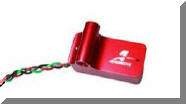
An interesting article appeared in the July 2005 issue of "Hot Rod" Magazine.  It covered a new product by Aeromotive Inc, shown at left.  It is a sensor installed in place of a lower fuel bowl screw on a Holley.  The sensor measures fuel height and outputs the value in a voltage reading from 0 to 5V.  They note even on a dyno they get wide swings in fuel level!  Wonder what it would read on both bowls at the drag strip!?  It is part number 16304.  Look under "Accessories and Electronics" Category of products.

The folks at Aeromotive are experts in fuel flow, and even they appeared surprised that the inrush of fuel into the bowl caused when full power was applied (on a dyno) created aeration of the fuel as it rapidly went through the small hole in the needle valve assembly.  They indicated lowering pressure to 4 psi reduced the aeration and fuel level variations.
Reducing the pressure may be one solution.  However my observation an addition of a bronze fuel filter (right) also solved my surge flow problem without a reduction in pressure.  In fact the pressure drop across the fuel filter will be proportional to flow.  Therefore when the float opens the needle valve fully (on the Holley Model 4781C it is the somewhat larger 0.110 needle valve assembly installed on both primary and secondary bowls) the pressure will reduce.  In addition the bronze filter will act to provide a less turbulent fuel stream to the needle valve input opening.  Wish I could measure those pressure, but it worked for this application and still retained the higher pressure to provide the needed flow.
The Areomotive sensor would be a great product to try at the strip feeding the data from both bowls into a laptop.  The dynamics of fuel level changes would be interesting to plot.  May need some bowl modifications to control to the level desired.  If anyone has data from the use of the device, please send it to me Click Here.

This Site:

We're "hitchhiking" on our commercial web site to bring you this information on 1934 Street Rod   If you or a friend have a MIG Welder (also called a Wire Welder, GMAW, etc) visit our site on How To Save Shielding Gas Waste. You can reduce the number of times and the effort required to have your shielding gas cylinder filled in half!  Just click HERE.  You can return to this site by using the  Links at the bottom of the "CAR BUFFS" page.

$ave money and get better weld starts!

If you make a lot of short welds and weld tacks you can probably reduce your gas usage by 50% or more.  Also fewer trips to have the cylinder filled. 

GSS PRODUCTS

Return to Modifying Holley Home Page

▲ Go To Vacuum Secondary

Check out these web sites describing our products, the car and the cooling system:


GSS PRODUCTS


About the Author (Click on Photo)


Save over $1000 per year per welder and improve weld starts with Payback measured in weeks!!
* US Patent  # 6,610,957;  "Welding Shielding Gas Saver Device" August 26, 2003,  Patent Pending in other countries.   The "Flow Rate Limiter" device is
 covered by 2008 US patent #7,462,709.  Other site material may be covered under our 2006 US Patents # 7,015,412 or # 7,019,248 .
Questions?   Send E-mail TechSupport@NetWelding.com
Last modified: 08/31/10

Copyright © 1999-2010 WA Technology TM; GSS TM.  All rights reserved.