|
|
|
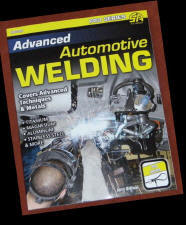
"NEW" Book:
"Advanced Automotive Welding"
Author: Jerry Uttrachi
(President of WA Technology)
This 176 page book includes detailed metallurgical information about
welding Chrome-Moly
CLICK for Book Details |
|
|
|
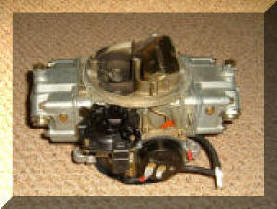
Holley Carb for a Big Block
Chevy
Purchasing a ZZ 502/502 from Chevy gets a "special" 850 Holley
Carb, one would think it was dyno tuned to match this excellent combination of
engine components. Well if it was, perhaps at max throttle and power, it sure
was far off at cruise and when accelerating in a relatively light Street Rod
that really hooks up!! I have had a number of ZZ502 owners indicate
similar tuning problems.
|
|
Bottom Line
It was necessary to swap the Holley 850 Vacuum Secondary Carb that came with
the Chevy 502/502 motor kit with a Holley 850 Double Pumper to achieve, on rapid acceleration,
the complete elimination of a Bog due to a lean fuel/air mixture or a
Hesitation if the secondaries were set to
open slow enough to prevent the Bog . After having spent months trying to
make the Vacuum Secondary Carb work, the use of an air/fuel meter clarified the
decision to switch carbs . For details about the meter and how is was invaluable, click on
AIR/FUEL METER DETAILS.
NEW INFORMATION
Hot Rod Magazine,
July 2005, had an interesting article about a new product that
validates some of the unique modifications needed for the "Double Pumper," check
it out.
|
|
"Double Pumper"
Modifications
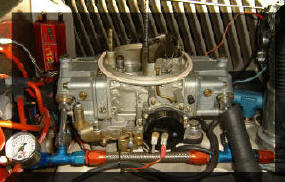
Even the Double Pumper purchased (Holley # 4781C) needed quite a few modifications to operate
on this Street/Performance ZZ 502 engine in this relatively light Pro Street 1934 Ford. The
car only weights 3000 pounds with 53% of the weight on the rear 16 inch wide
Mickey Thomson's. It gets a very good bite and super acceleration. It is necessary to consider the effects of rapid acceleration and
quick RPM increase on the fuel delivery system . The modifications include;
|
|
|
|
On the
Primary:
-
Swapping the 30 cc front accelerator pump with a
50 cc
Pump,
-
Use of a Yellow accelerator pump
Cam,
-
Increasing Squirter Size,
-
Installing High Flow
Squirter
Screws,
-
Switching to a lower opening value
Power Valve,
-
Decreasing the Jet Size to achieve the proper cruising air/fuel ratio,
-
Increasing the Power Valve fuel passage diameter to compensate for the
smaller Jets
|
|
On the Secondary:
-
Plugging the Power Valve fuel passage,
-
Increasing the Jet Size to compensate for the plugged Power Valve,
-
Installing Jet Extensions to move the Jets to the rear of the bowl to
assure they are immersed in fuel at all times,
-
Evaluated various Squirter Sizes,
-
Use of a Brown accelerator pump
Cam to provide enough fuel quickly when
accelerating,
-
Installing High Flow
Squirter
Screws,
-
Replaced the fuel bowl vent with higher tube and a fuel bowl
"Whistle" to eliminate the chance of
fuel spilling into the carburetor throat when decelerating.
Details of all the changes made and test results from adjustments to the
Vacuum Secondary Carburetor are provided on the site.
Want the tuning details?
|
|
Modifying Vacuum Secondary 850 Carb
The ZZ 502/502 engine kit came with a Holley 850 CFM vacuum secondary
carburetor. One would think it was dyno-tuned by Chevy or Holley since it
was part of they kit. Well if they did, it didn't help at all with the
transient performance when accelerating or even cruising in a light Street Rod! In any
instance, tuning on an engine dynamometer or even a chassis dyno is not
sufficient for a car pulling better than a "G" acceleration off the line!
What do you think happens to the fuel in the rear bowl under those conditions? We'll explain.
Although the vacuum secondary Carb was ultimately replaced with a Double
Pumper a great deal of
time was spent and improved results achieved with the Carb supplied. Some
may find the modifications and improvements sufficient for their needs so we
will describe them in detail. See details of modifying original
Vacuum
Secondary Holley 850 Carb.
Modifying Holly 850 Double Pumper
It was ultimately necessary to replace the Vacuum Secondary Carb with a
Holley 850 Double Pumper to achieve optimum results. Even it needed
significant modifications. See
details of modifying the Double Pumper Holley 850
Carb.
|
|
The information in this site summarizes the extensive experience in making
a Chevy 502/502 Big Block perform for street/strip type use in a relatively light Street Rod. It covers
what none of the references detailed to make the system work to its optimum. That
we have achieved.
Note: This site is NOT meant to be a source for understanding the principles of how
a Holley or for that mater how any carburetor works. There are a number of
books and some Internet sites that can provide that information
(see References,
Tools and Background )
|
|
 Received
this comment about the 5 pages of information provided about Modifying
Holley Carbs: Received
this comment about the 5 pages of information provided about Modifying
Holley Carbs:
"I absolutely loved the
information on the 850 Holley Double Pumper! I do have one
question.....You mentioned a change in squirter size, I didn't notice
what sizes you went to or from? Your article was a HUGE help to me."
Thanks, Jeff
The answer to Jeff's
question is after trying several sizes, #31's were left on the primary
and the secondaries changed from #31's to #42's.
|

Free Technical Paper, "MIG
SHIELDING GAS
CONTROL" |
|
Detailed Review of GSS |
 Stop
Wasting Shielding Gas!! Stop
Wasting Shielding Gas!!
Improve Weld Start Quality
See YouTube Videos
About Our
Patented MIG Shielding
"Gas
Saver System" (GSS)
Just Click on Picture
|
|

Short Overview of GSS-
90 Seconds |

What Users Say About
GSS |
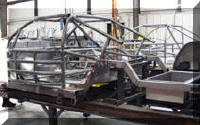
Welding Race Cars
|
|
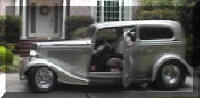
 Engineering a 1934 Pro Street Rod Engineering a 1934 Pro Street Rod
Click for YouTube Video
Overview of Car

 Click
for a 67 Page PDF Click
for a 67 Page PDF
|
|
 MIG
Gas Delivery and the Small Block Chevy Evolved in a Similar Way and Time! MIG
Gas Delivery and the Small Block Chevy Evolved in a Similar Way and Time!
Both had Advances and
Setbacks Before
They Were Optimized!
Click
for a PDF Report on the Similarities |
| Check out these web sites describing
our products, the car and the cooling system: |
|
GSS
Customer Testimonials: PDF Download |
|
| Car Buffs: See
More Info About Our Street Rod |
 |
|
Cooling a Chevy ZZ 502 Big Block in a Street Rod |
|
|
Check Out Welding
Math Site
|
|
| Corvette
Accessory Installation Info |
 |
|
"WARNING: "Weld
Safely" |
 |
|
►GSS
PRODUCTS |
|
About the Author (Click on Photo)

|